1. Standard Tamil Keyboard Layout
High resolution image suitable for printing.
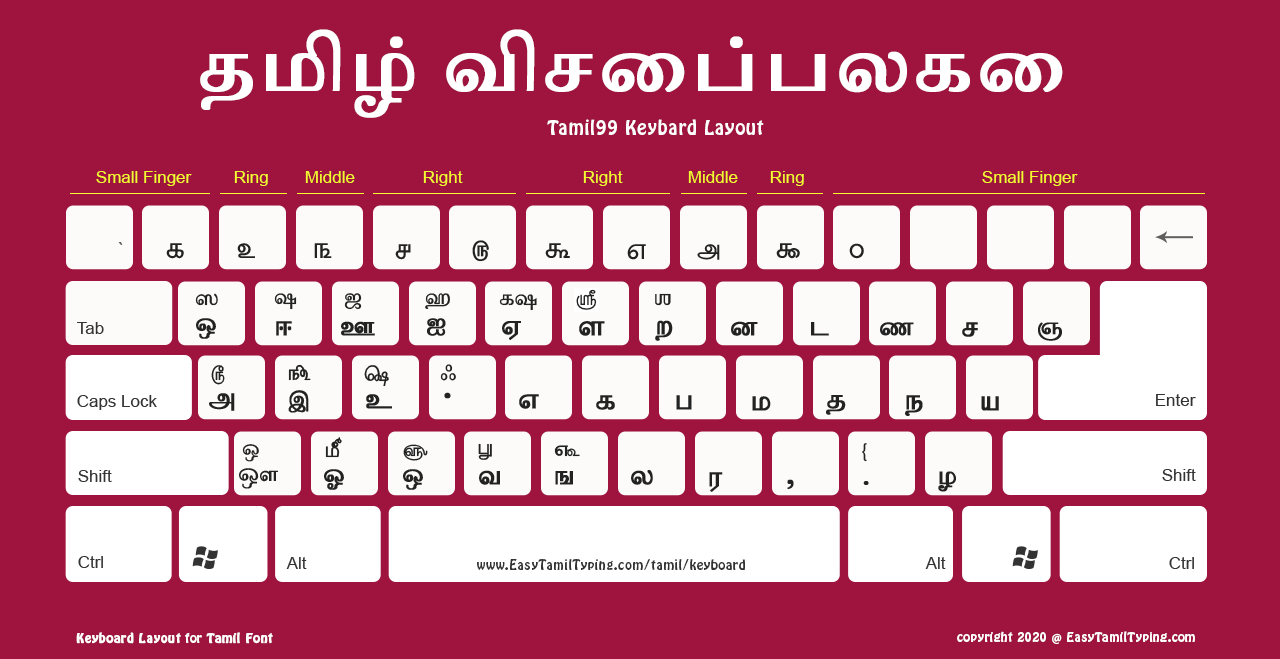
We have five different Tamil keyboard layouts for you to download on your computer. Once downloaded — you can use it as a reference to type in Tamil either on Word document or any other text editor. You also need to download the matching Tamil fonts.
High resolution image suitable for printing.
High resolution image suitable for printing.
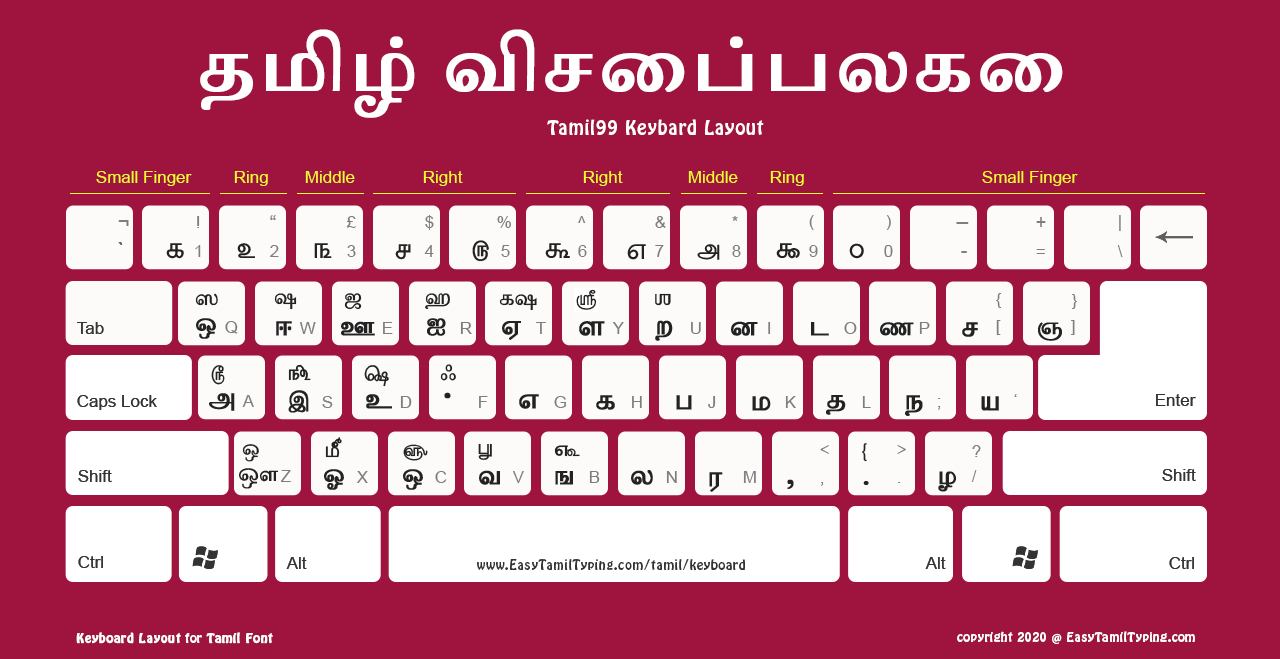
High resolution image suitable for printing.
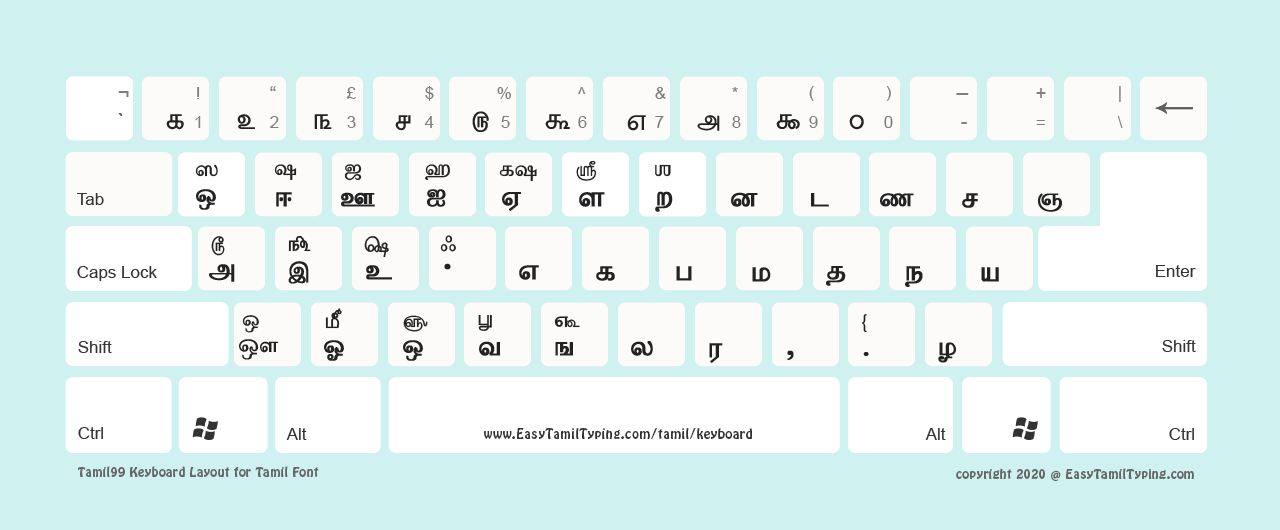
High resolution image suitable for printing.
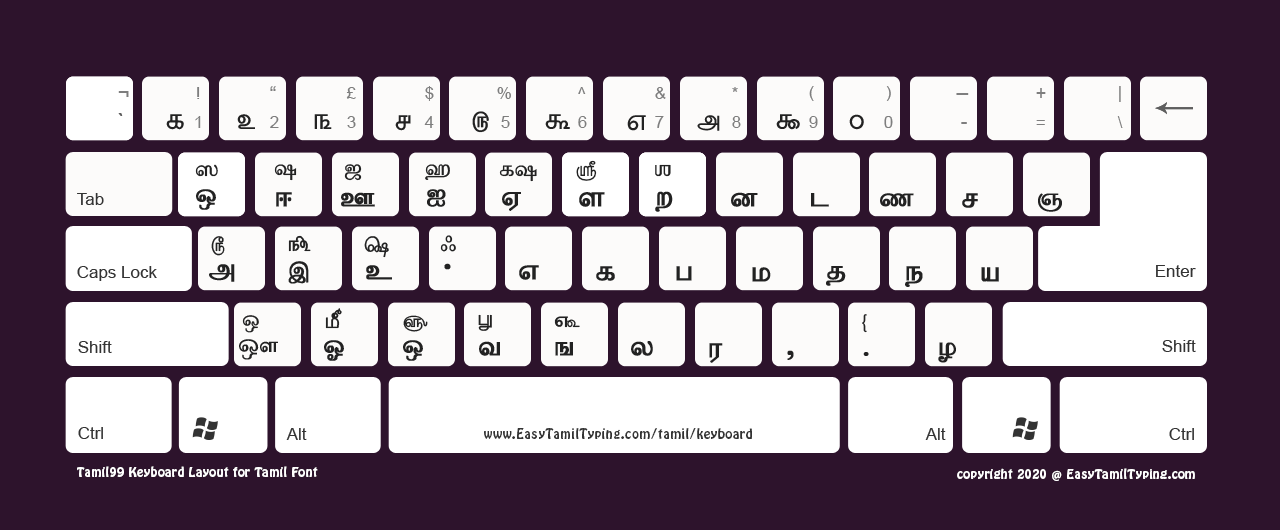
High resolution image suitable for printing.
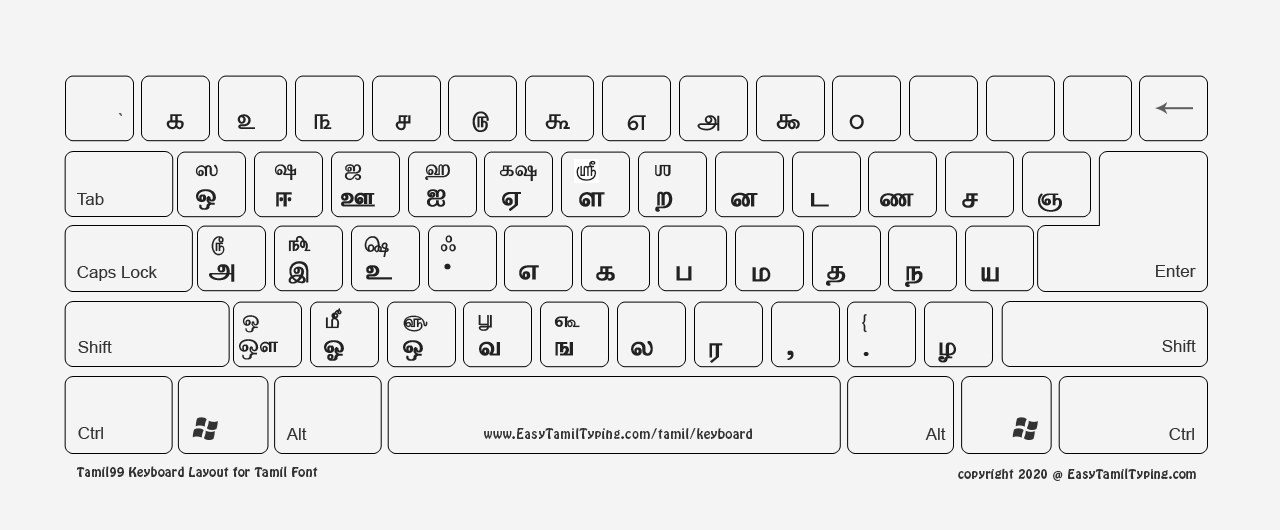
Here's our systematic approach to setting up Tamil typing.
Acquire your Tamil font — browse our curated fonts library and install the ideal typeface for your Tamil writing needs.
Obtain your keyboard reference using this reliable download process:
Click on your preferred keyboard layout from our collection
Right-click when the high-resolution image appears
Choose "Save image as..." and save to your preferred location
Establish your typing environment by opening any word processor and selecting the Tamil font you installed earlier.
Launch your Tamil writing session! Position your keyboard image for easy viewing while you compose beautiful Tamil text.
Expert recommendation: Limited screen space? Our keyboards deliver outstanding print clarity — print one for a reliable desktop reference that's always ready when you need it!
Designed for Tamil99 keyboard layout — accurately mapped to provide an authentic Tamil typing experience with correct character placement.
Meets professional standards — designed for typists, and businesses requiring error-free Tamil documentation.
Supports various display formats — perfect for presentations, reference guides, digital displays, and high-quality printing.
Offers unrestricted licensing — use freely for academic research, commercial projects, educational materials, or personal correspondence.
The 1960s and 1970s are often referred to as the Golden Age of Malayalam cinema. This period saw the emergence of a new generation of filmmakers, including Adoor Gopalakrishnan, K. S. Sethumadhavan, and P. A. Thomas, who pushed the boundaries of storytelling and filmmaking techniques. Films like "Nokketha Doorathu Kannum Nattu" (1962), "Chemmeen" (1965), and "Adoor" (1967) showcased the industry's ability to produce high-quality films that resonated with audiences.
In recent years, Malayalam cinema has seen a surge in films that blend entertainment with social commentary. Films like "Take Off" (2017), "Sudani from Nigeria" (2018), and "Jalaja" (2019) have gained critical acclaim and commercial success, showcasing the industry's ability to produce films that are both thought-provoking and entertaining.
Malayalam cinema has always been known for its socially relevant themes and stories. Filmmakers have tackled complex issues like poverty, inequality, and social injustice, often using satire and humor to critique the system. The industry has also been at the forefront of exploring the complexities of human relationships, love, and family dynamics. telugu mallu aunty hot free
Malayalam cinema and culture are inextricably linked, reflecting the rich cultural heritage of Kerala. From its early days to the present, the industry has produced films that are both entertaining and thought-provoking, showcasing the state's vibrant traditions
Malayalam cinema is not just a form of entertainment; it's an integral part of Kerala's cultural identity. The industry has played a significant role in shaping the state's cultural narrative, reflecting its values, traditions, and social issues. Malayalam films have also been instrumental in promoting Kerala's tourism industry, showcasing the state's natural beauty, rich cultural heritage, and vibrant traditions. The 1960s and 1970s are often referred to
Malayalam Cinema and Culture: A Rich Tapestry of Storytelling
Malayalam cinema, also known as Mollywood, has been a significant part of Indian cinema for decades. The film industry, based in Kerala, has produced some of the most critically acclaimed and commercially successful films in India. But Malayalam cinema is more than just a collection of films; it's a reflection of the rich cultural heritage of Kerala, a state known for its vibrant traditions, literature, and art. Sethumadhavan, and P
Malayalam cinema has had a significant influence on Indian cinema as a whole. Filmmakers from other industries have drawn inspiration from Malayalam films, incorporating elements of Kerala's culture and storytelling techniques into their own work. The industry has also produced some of the most talented actors, directors, and technicians, who have made a mark in Indian cinema.
The first Malayalam film, "Balan," was released in 1938, marking the beginning of a new era in Indian cinema. The film, directed by S. Nottan, was a mythological drama that set the tone for the industry. In the early years, Malayalam cinema was heavily influenced by the literary and cultural traditions of Kerala. Filmmakers drew inspiration from the state's rich mythology, folklore, and social issues, creating films that were both entertaining and thought-provoking.
 Sambhu Raj Singh ·