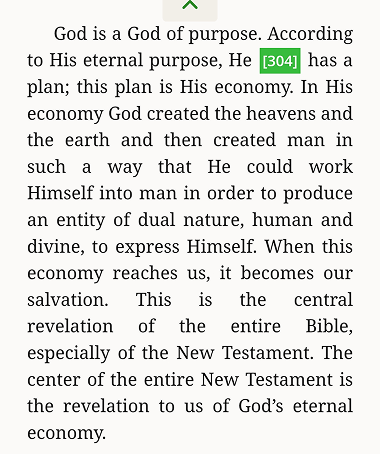
How to Find Book Information

Note: To play the video click or tap on the play button: or . In some browsers the play button is only in the lower left corner of the video.

How to Change Font Size

Note: To play the video click or tap on the play button: or . In some browsers the play button is only in the lower left corner of the video.

How to Jump to a Page Number

Note: To play the video click or tap on the play button: or . In some browsers the play button is only in the lower left corner of the video.

How to Mark a Publication as Completed

Note: To play the video click or tap on the play button: or . In some browsers the play button is only in the lower left corner of the video.

How to Set a Bookmark

Note: To play the video click or tap on the play button: or . In some browsers the play button is only in the lower left corner of the video.

How to Use the Highlighting Feature

Note: To play the video click or tap on the play button: or . In some browsers the play button is only in the lower left corner of the video.

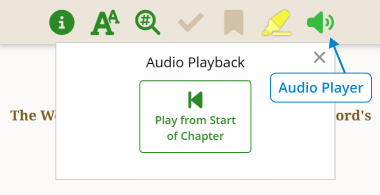
How to Listen to a Publication

Note: At this time, audio is only available for The Collected Works of Witness Lee and the Life-studies.

Note: To play the video click or tap on the play button: or . In some browsers the play button is only in the lower left corner of the video.

How to Navigate in the Reader

Note: To play the video click or tap on the play button: or . In some browsers the play button is only in the lower left corner of the video.

Search Overview

Note: To play the video click or tap on the play button: or . In some browsers the play button is only in the lower left corner of the video.

Weidian Search Image Info

Technically, the Weidian Search Image ecosystem rests on advances in computer vision and metadata engineering. Convolutional neural networks and transformer-based models translate pixels into vector spaces where similarity is measurable. Image embeddings let platforms index and retrieve visually related items at scale. Meanwhile, robust tagging pipelines—whether manual or automated—ensure relevancy in multilingual and multicultural contexts. Performance depends on the marriage of visual models and rich, structured metadata: without both, search can be either precise or interpretable, but rarely both.

Consider also how Weidian Search Images function for makers and small sellers. For micro-entrepreneurs, a single evocative image can replace expensive storefronts and ad campaigns. It democratizes access: a well-composed photograph on a modest smartphone can carry a handcrafted object to global buyers. But it also forces sellers into the aesthetics economy—lighting, staging, and continual refreshment of visual inventory. Their identity becomes mediated not only by product quality but by their ability to produce scroll-stopping imagery. This intensifies labor: the craft of commerce now includes photography, post-production, and data tagging.

There is a moral and legal strand, too. As images circulate, issues of copyright and appropriation arise. Visual similarity search can surface copyrighted designs or reveal unlicensed copies. Platforms must navigate takedown obligations and fair-use defenses while enabling discovery. For sellers, the line between inspiration and infringement is sometimes thin. Policies and enforcement matter—not only to protect creators but to preserve a healthy marketplace where originality is rewarded. Weidian Search Image

User experience design then stitches these elements into behavior. How results are presented—grid density, the balance of product shots and lifestyle photos, the presence of reviews and price—guides decision-making. Microinteractions (hover previews, zoom-on-tap, image-to-product mapping) reduce friction and build trust. For accessibility, alt-text and high-contrast previews matter; for conversions, contextual images (people using the product) close the imagination gap. The best interfaces treat the image as conversation starter, not the final word.

Yet with this shift comes friction. The power of images to capture also enables obfuscation. Lighting and angles may conceal defects; post-processing may misrepresent scale. Search images can mislead unless coupled with robust metadata and trustworthy review systems. Platforms that host them must balance aesthetic curation with transparency—accurate dimensions, clear return policies, and contextual photos that show wear, fit, and scale. Otherwise, the efficiency gained by visual search becomes a brittle illusion. Technically, the Weidian Search Image ecosystem rests on

Weidian Search Image, then, is more than a feature or a phrase. It is a node in a network where aesthetics, commerce, technology, and law meet. It shapes economies of attention and labor, remaps discovery around visual logic, and reflects the cultural currents of taste. As vision models improve and as marketplaces refine trust mechanisms, the role of search images will only deepen: they will become richer signals, smarter proxies, and perhaps, for better or worse, the primary language through which goods and desires find one another.

The second dimension is narrative compression. Images compress stories: provenance, use, aspiration. A worn leather bag photographed on a café table speaks of urban mobility and slow craftsmanship; a cascade of colorful phone cases laid against white foam hints at variety and mass accessibility. In search results, the compressed stories collide and reorder according to user intent. Visual search tools increasingly parse texture, logo, and silhouette, surfacing items with visual affinity rather than lexical match. The result alters discovery: shoppers chase resemblance and mood, not always product names. Visual similarity becomes a new currency—an economy of lookalikes, inspired copies, and creative reinterpretations. and trend forecasters. In essence

Think first of the image as entry point. In a crowded marketplace, an image must do heavy lifting: it must announce identity, imply quality, and promise relevance within a glance. A single search image acts like a shopfront—framed, lit, staged—an invitation to click through. But unlike a brick-and-mortar window, the search image competes across contexts: related suggestions, sponsored placements, social posts, review galleries. Its potency lies not only in aesthetics but in metadata—the tags, alt-text, timestamps, and thumbnails that allow retrieval. An effective Weidian Search Image is therefore doubled: a visual composition for humans and a packet of signals for algorithms.

Weidian Search Image—at once a phrase and an idea—invites consideration of how small images, curated thumbnails, and searchable visual fragments shape commerce, memory, and attention in the digital marketplace. The words suggest a platform or function: “Weidian,” a marketplace name carrying connotations of private storefronts and individualized trade; “Search Image,” the action of looking for meaning and product through pictures rather than through text. Together they open a window onto modern visual culture: how images become interfaces, agents of desire, and archives of value.

Finally, there is the human scale: how individuals interpret images in the intimate act of choosing. When we click a Weidian Search Image, we bring experience—memories of textures, hopes for how an object will fit into life, skepticism honed by past disappointments. The image must negotiate that history. It must be legible, honest, and suggestive enough to let the viewer imagine possession. The most powerful images do not just display; they translate possibility into expectation.

Beyond commerce, search images map desire and culture. Aggregated, they reveal patterns: color trends, seasonal palettes, and emergent forms. Visual search queries—what people look for by image—trace shifting aesthetics and social anxieties. Is there a sudden surge in muted earth tones? Are shoppers searching for “antique-like” finishes? These signals inform designers, manufacturers, and trend forecasters. In essence, Weidian Search Image is a sensor: it registers collective taste and feeds it back into production loops.
Publications Included
Free (also included with a subscription):
Life-study of the Old and the New Testament, 1st ed., by Witness Lee (1,984 messages)
The Life-study of the Bible is a book-by-book study of the entire Bible with the focus on life.
Selected titles
The All-inclusive Christ, by Witness Lee (16 chapters)
Central Messages: Christ is All Spiritual Matters and Things, by Watchman Nee (2 chapters)
The Economy of God, by Witness Lee (24 chapters)
The Glorious Church, by Watchman Nee (6 chapters)
The Gospel of God (1), by Watchman Nee (14 chapters)
The Gospel of God (2), by Watchman Nee (12 chapters)
The Knowledge of Life, by Witness Lee (14 chapters)
The Ministry of God's Word, by Watchman Nee (18 chapters)
The Orthodoxy of the Church, by Watchman Nee (9 chapters)
The Prayer Ministry of the Church, by Watchman Nee (5 chapters)
Subscription Only:
Life-study of the New Testament, 2nd ed., by Witness Lee
The Collected Works of Watchman Nee (62 volumes)
This publication series contains 62 volumes with over 15,000 pages and covers the years from 1922 to 1952. It is a collection of the messages, publications, manuscripts, and hymns of Brother Watchman Nee.
The Collected Works of Witness Lee (139 volumes)
This publication series contains 139 volumes with over 77,000 pages of ministry, given from 1932 to 1997, including hymns written by Brother Witness Lee and notes from his personal Bibles. A general topical index and an index of select theological and scriptural terms is also included.
The Conclusion of the New Testament (436 messages)
Lesson Books, Levels 1-6 (144 lessons)
These lesson books are based on and compiled from the writings of Watchman Nee and Witness Lee and were designed to teach the truth to junior high and high school students during their summer school of truth.
Life Lessons, volumes 1-4 (48 lessons)
Truth Lessons, Level One, volumes 1-4 (48 lessons)
Truth Lessons, Level Two, volumes 1-4 (48 lessons)
Truth Lessons, Level Three, volumes 1-4 (64 lessons)
Truth Lessons, Level Four, volumes 1-4 (60 lessons)
Watchman Nee—a Seer of the Divine Revelation in the Present Age, by Witness Lee (33 chapters)
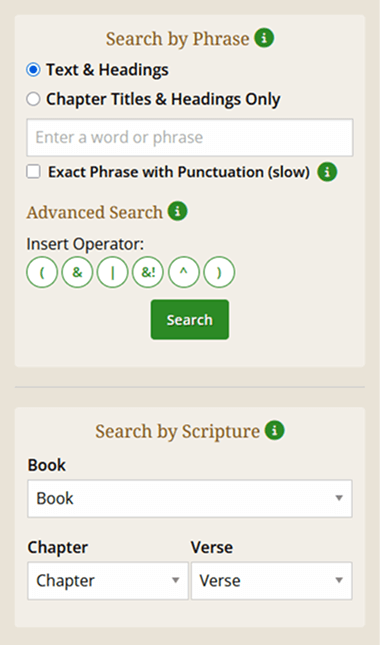
Advanced Search
Search

Search the entire works of Watchman Nee and Witness Lee by text or by Scripture.


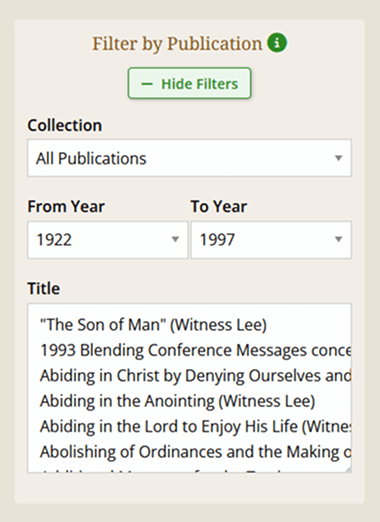
Filter by Publication

Refine search results by filtering by collection, years, or specific titles.


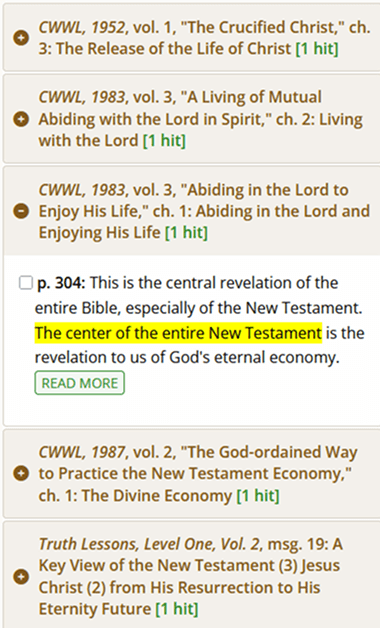
Search results

Search results are grouped by chapter, and the number of hits in each chapter is indicated. Click on a chapter to display text snippets for each hit. Click on the "Read More" button to open and read more. (Subscription required except for free titles.)


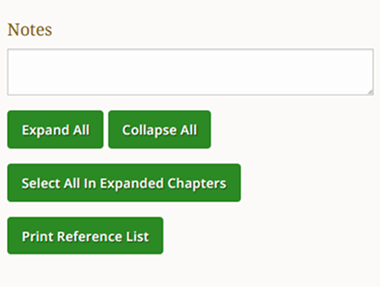
Search results

At the bottom of the search results page, add notes or print a reference list by selecting the specific results you want included.

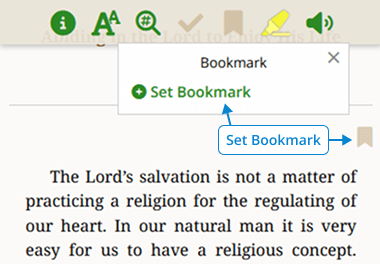
Bookmark
Set Bookmark

Add a bookmark to save your location.


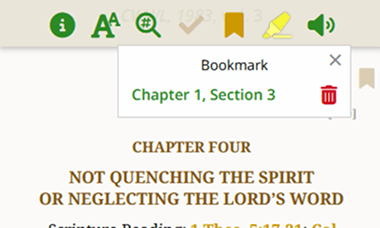
Bookmark location

Return to your bookmarked location, or remove the bookmark.


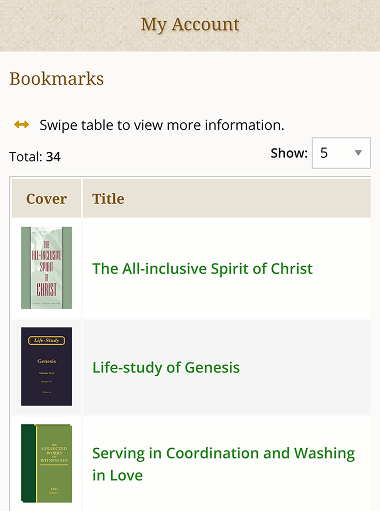
Bookmarks page

View all your bookmarks for easy access to titles you are reading.

Annotations
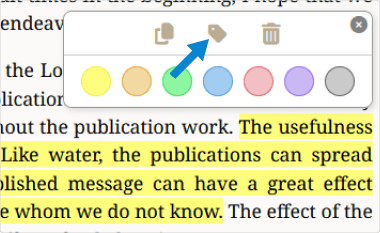
Add a tag

Highlight text as you read. Copy selected text for easy sharing. Add tags to any highlighted portion.


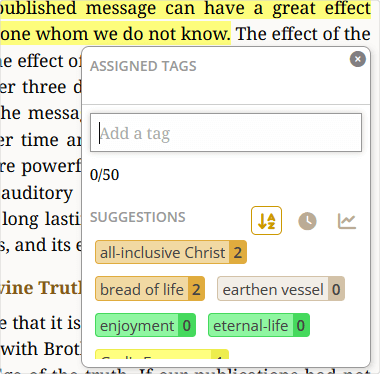
Create tag or choose from previous tags

Create a new tag or choose from previous tags you have added.


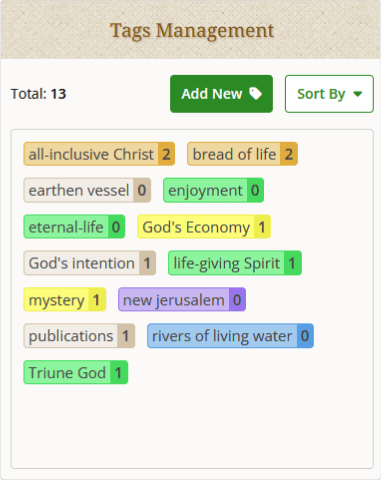
Tags management page

View and manage all your tags on the tags management page.

Keep Track of Completed Titles
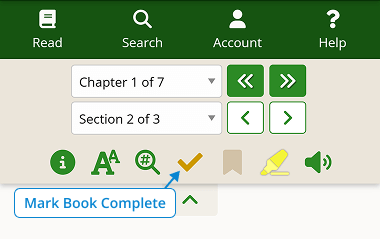
Mark book complete

When finished reading a title, you can mark it "completed" by tapping the "checkmark" icon on the toolbar.


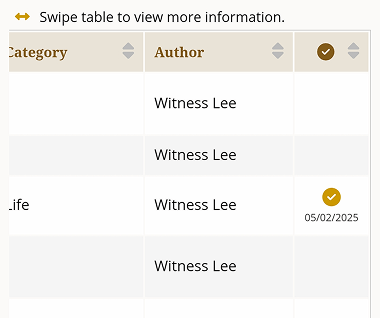
See which books are completed

See which titles you have completed in the titles list table.


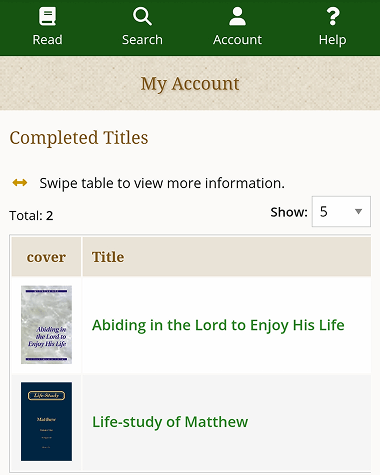
Completed titles page

Also see a completed titles list in your account section.

Listen to Audio Readings from CWWL and LS
Listen to audio

Listen to audio readings from any title in The Collected Works of Witness Lee and Life-study of the Bible, 1st ed., by clicking the audio icon with the publication open in the reader.


Audio player

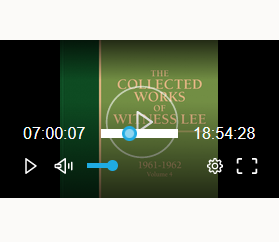
Pause, play, and navigate through the publication in the audio player.

Page Number Search
Page number search

Page numbers from Collected Works, Life-study of the Bible, and Conclusion of the New Testament print publications are included in the text.


See page numbers in the text

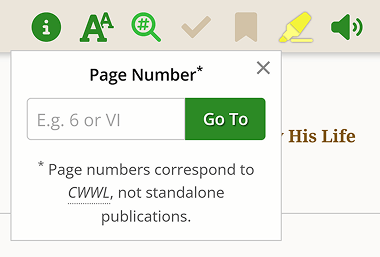
Click on the page number search icon and enter a page number from one of the collections to jump to that location in the reader.


Page number highlighted

Searched-for page number will be briefly highlighted.

Reading Themes
Sepia theme preview

Sepia

Choose from four reading themes to customize your reading experience:

  • Light — The default bright theme
  • Dark — Easy on the eyes at night
  • Sepia — A warm paper tone
  • Green — Easy on the eyes

There is also an Auto option that follows your device’s system setting.


Green theme preview

Green

Switch themes instantly from the navigation bar, mobile header, or reader toolbar. Your selection is saved and applied across all pages.


Dark theme preview

Dark

Try Auto mode to let the site match your device’s light or dark setting automatically — it switches for you throughout the day.

New Feature — Reading Themes

Customize your reading experience with three new themes. Switch instantly from the navigation bar, mobile header, or reader toolbar — your selection is saved across all pages.

Sepia theme

Sepia

Green theme

Green

Dark theme

Dark

Click the 'X' button above to acknowledge this notice.